
Heat Network Technical Assurance Scheme
If you operate, manage, or own a heat network in the UK, 2026 is the year to get ahead of HNTAS. The Heat Network Technical Assurance Scheme is the government’s new compliance framework for technical standards – and with formal regulation set to come into force in 2027, the window to prepare is now.
At Ginger Energy, we’ve been supporting heat network operators across the UK through more than two decades of change in this sector. From the Heat Network (Metering and Billing) Regulations 2014 to Ofgem’s landmark regulatory framework that took effect in January 2026, we’ve helped housing associations, block managers, developers, and ESCo operators navigate every shift. HNTAS represents the next significant step, and we want to make sure our clients understand what’s coming.
What is HNTAS?
The Heat Network Technical Assurance Scheme (HNTAS) is a new compliance and certification framework being developed by the Department for Energy Security and Net Zero (DESNZ). Its purpose is to establish mandatory minimum technical standards for heat networks across England, Scotland, and Wales, and to provide operators with a structured, independently verified way of demonstrating that those standards are being met.
In short, HNTAS moves heat network technical performance from voluntary best practice into formal, regulated territory. The scheme is underpinned by the Energy Act 2023, which gave government the legal powers to introduce technical regulation across the sector. The technical standards themselves are largely built on CIBSE CP1 (2020), the Chartered Institution of Building Services Engineers’ Code of Practice for heat networks, but with new mandatory requirements in several key technical areas that go beyond what CP1 currently asks of operators.
DESNZ is working with FairHeat as its technical author to develop the standards. A formal consultation on HNTAS launched in January 2026 and closed in April 2026, with final standards, guidance and assessor training expected to be published in 2027 ahead of the scheme going live.
Who Does HNTAS Apply To?
HNTAS applies broadly, from small communal heating systems in a single apartment block to large district heat networks serving multiple buildings across a development or city centre. If you are responsible for a heat network in any capacity, this scheme is relevant to you. This includes:
Social housing providers – housing associations, local authorities, Arms-Length Management Organisations (ALMOs), and managing agents operating communal or district schemes on behalf of public sector landlords.
Private sector operators – developers, Build to Rent (BTR) operators, freeholders, managing agents, and Energy Service Companies (ESCos) who own or manage residential or mixed-use heat network assets.
The standards will apply at every stage: feasibility, design, construction, and operation. For new build networks, HNTAS requirements are expected to apply from the scheme’s regulatory launch in 2027, with assessment gateways built into each development phase. For existing networks, a phased and proportionate pathway is being designed, recognising that retrospective compliance with new-build standards would in many cases be disproportionate.

What Are the Technical Standards?
The technical standards HNTAS will mandate are set out in a new Heat Network Technical Standard (TS1), published in November 2025, alongside the broader HNTAS consultation released in January 2026. TS1 replaces CIBSE CP1 as the sector’s primary technical reference document.
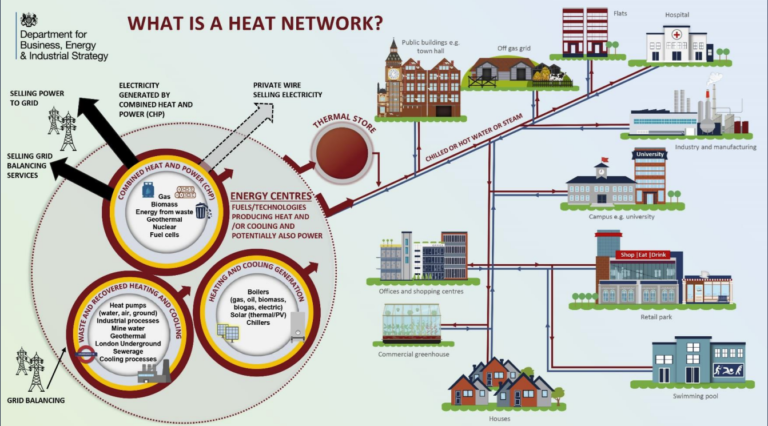
The draft technical specifications cover requirements across each element of a heat network, which HNTAS defines as:
- The Energy Centre
- The District Distribution Network
- Thermal Substations
- The Communal Distribution Network
- Consumer Connections
For each element, the specifications set out the technical requirements operators must meet, the performance monitoring expected to be in place, key failures to avoid, and the evidence required to demonstrate conformity with the standard.
Draft assessment procedures accompany the technical specifications, describing the process by which heat networks can undergo independent assessment and achieve HNTAS certification.
Government piloting of HNTAS began in January 2025 for new networks, with a further pilot on eight existing heat networks launched in August 2025 to evaluate the Performance Improvement Plan process, the structured pathway through which existing networks will be assessed and brought up to standard over time.
HNTAS and the Metering & Monitoring Standard
One of the most significant new elements of the HNTAS framework is the Metering and Monitoring Standard (MMS), published alongside the January 2026 consultation. This is an entirely new standard (there is no direct predecessor) and it sets out the specific metering and monitoring requirements that heat networks must meet to demonstrate HNTAS compliance.
The MMS defines:
- Required meter point locations across each element of the network
- Minimum technical requirements for metering equipment
- Mandatory monitoring points for measuring key performance indicators (KPIs)
- The data capture and reporting requirements that support ongoing performance verification
Together, HNTAS and the MMS make accurate, reliable metering and dependable performance data essential, not just for billing purposes, but as the evidential backbone of ongoing compliance. This has significant implications for operators who have historically relied on manual or infrequent reads, ageing metering infrastructure, or fragmented data management approaches.
At Ginger Energy, metering and billing have always been central to what we do. Our work with heat network operators across London, Birmingham, and Manchester means we understand the practical realities of metering estate management – including the challenges of legacy infrastructure, HIU performance variation, and data retrieval. The requirements the MMS will introduce are ones we are already well-positioned to help clients navigate.
How Is HNTAS Being Regulated?
Ofgem will be the regulator for HNTAS. Each heat network will be required to have a named Responsible Party (typically the network operator) who is formally accountable for meeting HNTAS requirements.
DESNZ will act as the Code Manager for HNTAS, overseeing the technical standards code. The government is also procuring a Scheme Operator to manage the day-to-day administration of the assurance scheme, handling assessments, certification, and ongoing compliance monitoring on behalf of DESNZ and Ofgem.
This governance structure sits alongside the broader regulatory framework that Ofgem began administering in January 2026 under the Heat Networks (Market Framework) Regulations 2025. Those regulations introduced consumer protection requirements, authorisation conditions, and Guaranteed Standards of Performance that are being phased in through 2026 and into early 2027. HNTAS adds the technical performance layer to that consumer-facing regulatory framework.
What the HNTAS Timeline Looks Like
Understanding where we are in the HNTAS journey is important for planning:
January 2025 – Government piloting of HNTAS begins for new build heat networks.
August 2025 – Pilot on eight existing heat networks launched to evaluate the Performance Improvement Plan process.
November 2025 – Heat Network Technical Standard (TS1) published.
January 2026 – DESNZ publishes the Warm Homes Plan and launches the formal HNTAS consultation, alongside the new Metering and Monitoring Standard (MMS). The final tranche of the Heat Networks (Market Framework) Regulations 2025 also comes into force.
April 2026 – HNTAS consultation closes.
Early 2027 – Response to consultation published, alongside final code documents, technical standards, and the Metering and Monitoring Standard.
2027 – Regulatory launch of HNTAS. New networks subject to HNTAS requirements from this point. Existing networks begin phased compliance pathway.
What HNTAS Means for Existing Networks
Government has explicitly acknowledged that upgrading legacy heat networks can be costly and operationally disruptive. As a result, existing schemes will not be expected to meet the same immediate standards as new builds. Instead, operators of existing networks will follow a phased and proportionate compliance pathway, structured around Performance Improvement Plans (PIPs) that identify where a network falls short and set out the actions needed to achieve certification over time.
GDESNZ is also considering financial support mechanisms to assist operators, including:
- Grants and financial support for installing metering and monitoring equipment required by HNTAS
- Support for the cost of developing Performance Improvement Plans
- Subsidised assessment costs
- Financial incentives for early movers who achieve certification ahead of the mandatory deadline
These are still under consultation, and the details are expected to be confirmed alongside the final standards in 2027. However, the direction of travel is clear: government wants the sector to move towards compliance proactively, and early movers are likely to benefit from both financial incentives and a smoother transition.
How Ginger Energy Can Help
At Ginger Energy, we work with heat network operators, housing associations, local authorities, block managers, and developers – who are responsible for billing, compliance, and network performance across their portfolios. With Ofgem regulation now active and HNTAS on the horizon, our clients are increasingly asking us what they should be doing now to prepare.
Our view is that the most productive starting point for any operator is a structured review of your current metering and monitoring capability. Before you can assess where you stand against HNTAS requirements, you need confidence in your data, what meters you have, where they are, whether they are performing accurately, and what data is being captured and when.
We provide:
Whether you operate a single communal scheme in a residential block or a portfolio of networks across multiple developments, we can help you understand your current compliance position and plan for what HNTAS will require.
The Bigger Picture: Why HNTAS Matters
Heat networks are central to the UK’s net zero ambitions. Heat currently accounts for around 37% of UK carbon emissions, and the government’s target of net zero by 2050 requires a substantial increase in the proportion of heat supplied by low-carbon networked systems. The Warm Homes Plan, published in January 2026, sets out how heat networks, alongside heat pumps and other low-carbon technologies, will play a growing role in decarbonising domestic and commercial buildings.
With an estimated 14,000 heat networks currently operating in the UK, supplying around half a million customers, and projections that 5 million homes could be connected to heat networks by 2050, the sector is growing rapidly. HNTAS is the government’s mechanism for ensuring that growth is underpinned by robust technical standards, reliable consumer outcomes, and transparent performance accountability.
For operators, this is not just a compliance challenge. It is an opportunity to demonstrate the quality and reliability of your network, and to position your scheme well as the sector moves towards the regulated utility model that policy is now actively driving.
If you want to understand what HNTAS means for your heat network, or discuss how Ginger Energy can support your compliance journey, contact our team or call us on 0345 307 3433.
Related reading: Heat Network Regulation is Changing – What It Means for You | Official government guidance and drafts | HNTAS consultations | HNTAS overview | MMS | Draft HNTAS Technical Specs | Draft HTNAS assessment procedures